“These high-minded, noble animals of the superior sex were willing to stoop to the dirtiest work”

“These high-minded, noble animals of the superior sex were willing to stoop to the dirtiest work”

The Revolution, May 8, 1869

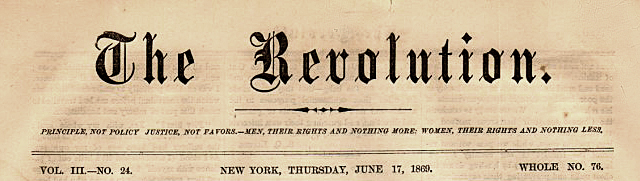
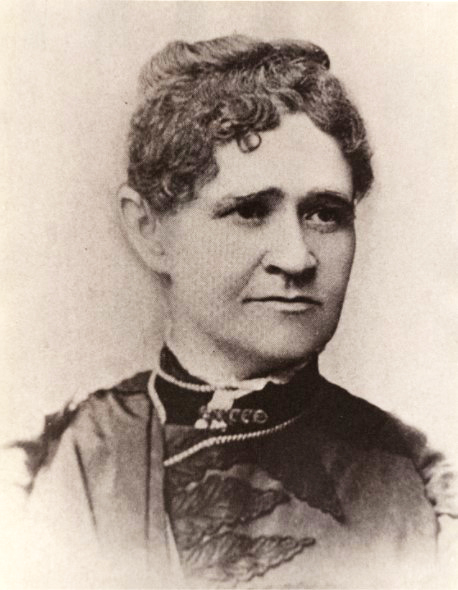
Angie King’s unsuccessful 1869 battle to be appointed Janesville’s postmaster (after Janesville’s male Republican voters elected her to the position) garnered national media attention. The Revolution, the women’s rights newspaper founded by Susan B. Anthony and Elizabeth Cady Stanton, published this article in its May 8, 1869 issue. (The actual column may be seen here.)
A good deal is being said in the papers just now about Miss Angie King, and a struggle for the Janesville, Wis., post-office. It seems that Miss King applied for the position, and was backed by a majority of the citizens of the place, who wished her to occupy it. When she reached Washington she found half a dozen lazy, hungry men seeking for the place, and leaving no stone unturned to get it.
Continue reading →
Posted by admin in Colleagues, 0 comments

“The contest for the post office is growing hotter every day.”

“The contest for the post office is growing hotter every day.”

Janesville Gazette, February 6, 1869

After Lavinia Goodell became Wisconsin’s first woman lawyer, she served as a mentor to other women looking to enter the legal profession. The life and career of Kate Kane, the second Wisconsin woman admitted to the bar, is chronicled here. The third woman admitted to practice law in Wisconsin was also from Janesville and enjoyed a close relationship with Lavinia.

Angie King

Angela Josephine King was born in Ohio in 1845. Her family moved to Janesville when she was an infant. In 1867 she graduated from the Janesville Ladies’ Seminary, which encouraged independence of thought in its young ladies in addition to stressing culture, refinement, and high moral character.

Continue reading →
Posted by admin in Life in Wisconsin: 1871-1880, Friends, 0 comments

“We are here to study literature.”

“We are here to study literature.”

Motto of the Round Table literary society, Janesville, Wisconsin

Lavinia Goodell’s diaries and letters tell us that she was a voracious reader. She read contemporary authors (Charles Dickens, Louisa May Alcott, Harriet Beecher Stowe), classics (Shakespeare),  and scientific works (Darwin’s “On the Origin of Species.”) 1870s Janesville, Wisconsin was home to two literary societies, and, not surprisingly, Lavinia was active in both.

Continue reading →
Posted by admin in Reading interests, Societies/clubs, 0 comments

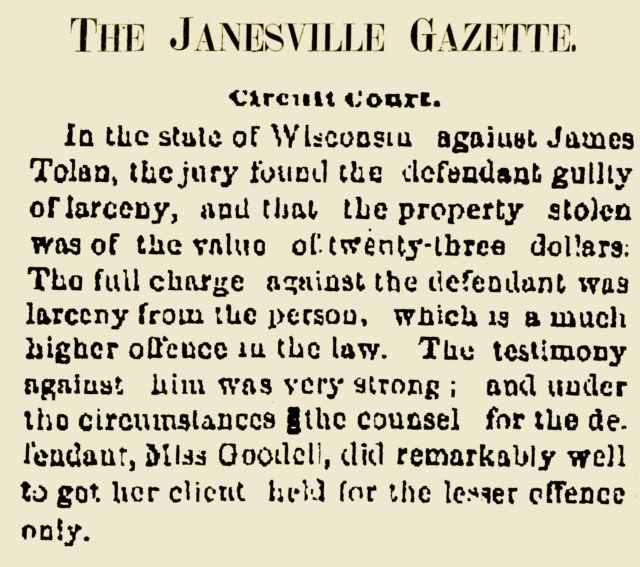
Reclaiming criminals: “My remedies will either kill or cure!”

Reclaiming criminals: “My remedies will either kill or cure!”

Lavinia was quite taken with James Tolan, her client accused of stealing a $23 watch. “I never had the confidence of a criminal before,” she told her sister.  “It was a very interesting experience.” Poor Tolan, an inmate of the Rock County jail, was literally a captive audience. Lavinia visited him often and, in her words, “persecuted him nearly to death” with lectures, tracts and sermons. She declared: “my remedies on him will either kill or cure!” Lucky for Tolan, Lavinia’s courtroom zeal matched her determination as a reformer.

November 16, 1875 Janesville Gazette article about Lavinia’s defense of James Tolan

Continue reading →

Posted by admin in Jail school/prison reform, Legal practice, 0 comments

“What shall we do with our criminals?”

“What shall we do with our criminals?”

In the fall of 1875, Judge Harmon Conger, the same judge who admitted Lavinia to the Rock County bar, changed the course of her legal career. She was sitting in her office drafting a client’s will when a sheriff popped in to announce that the judge had just appointed her to defend two criminals. One, James Tolan, was charged with stealing a watch from someone. The other, Harrison Cramer, had allegedly stolen spoons, jackknives, and a black silk belt from a store. The appointments surprised Lavinia.

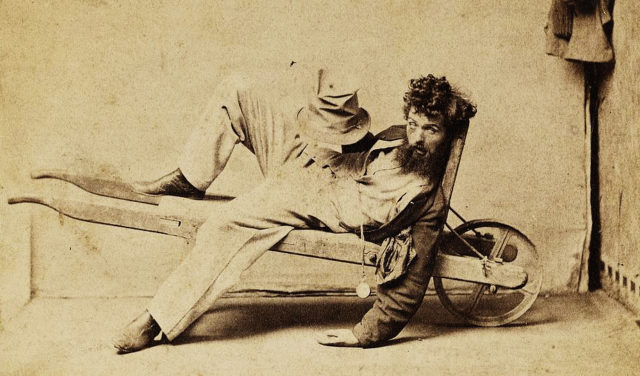
A drunk tramp with a pocket watch.

Continue reading →

Posted by admin in Jail school/prison reform, Legal practice, 3 comments

“Woman is man’s equal.”

“Woman is man’s equal.”

Declaration of Sentiments issued at Seneca Falls, New York, July 1848

“The equal right of Woman to social, civil and political equality, has always been to me like an axiom which it were as idle to dispute as to undertake to controvert the multiplication table.” – Lavinia Goodell, 1875

On July 19, 1848, the first woman’s rights convention held in the United States convened in Seneca Falls, New York.

The event was organized by Elizabeth Cady Stanton, a distant cousin of Lavinia Goodell’s mother, and Lucretia Mott. The women had met at an anti-slavery convention in London eight years earlier. Stanton and Mott were barred from the convention floor because of their gender, and their indignation formed the seeds of the women’s rights movement in America.

Seneca Falls Convention, 1848
Continue reading →
Posted by admin in Women's rights, 1 comment

Lavinia at the 1876 Centennial Celebration

Lavinia at the 1876 Centennial Celebration

From May to November 1876, Philadelphia hosted the first official World’s Fair in the United States. Called the “Centennial International Exhibition of 1876,” the event celebrated the 100th anniversary of the signing of the Declaration of Independence. Lavinia not only attended it, her certificate of admission to the Rock County Circuit Court bar and her briefs arguing for admission to the Wisconsin Supreme Court were, according to her sister, among the “curiosities” on display there.

The Centennial international Exhibition

Continue reading →

Posted by admin in Temperance, Women's rights, 0 comments

“From a Land of Slavery to One of Freedom”

“From a Land of Slavery to One of Freedom”

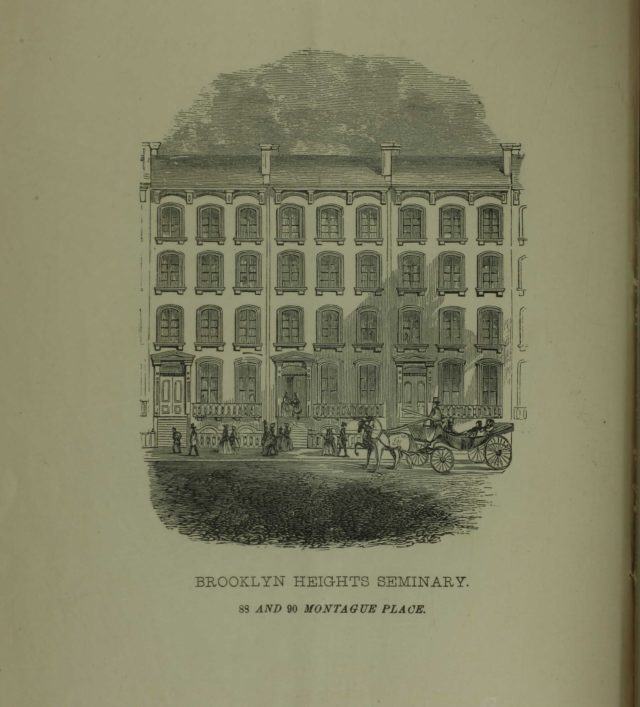
Lavinia Goodell grew up in a household imbued with the notion of equal rights for all, and throughout her life she was at ease with people who were different from herself. One of her classmates at the Brooklyn Heights Seminary in the 1850s was a girl from the south.

Here is how the schoolmate recalled Lavinia:

Soon I learned that Miss Goodell was considered the orator of the class, and one of the best scholars in the school. I was told that she was a great abolitionist and as I was from the south and the daughter of a slave holder, I did not expect her friendship. To my surprise, she took me at once under her wing, and was one of my best friends.

Continue reading →
Posted by admin in Principia years, Young Adulthood: 1860-1871, 0 comments