Blue Glass, Phrenology & Blood Food: 19th Century Health Crazes
As researchers rush to develop a vaccine for COVID-19, the pandemic has spawned a bevy of supposed miracle cures. People desperate for any glimmer of hope rush to try the magic elixirs and when they fail to produce the anticipated result, the users abandon them and move on to the next new thing. It has always been thus.
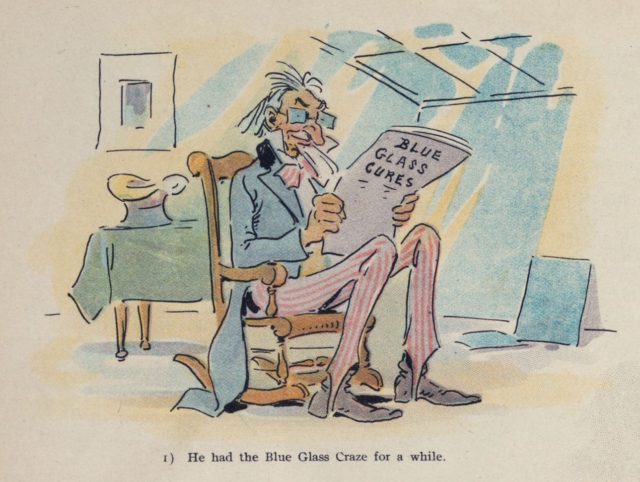
In early 1877, when Lavinia Goodell was weighing various options for the treatment of her ovarian tumor and her mother’s dementia was making life in the Goodell household increasingly difficult, Lavinia turned to a health craze that was sweeping the nation: blue glass.
Today’s post plus two new tabs on the navigation menu provide a rare glimpse of what it was like to be Wisconsin’s first woman lawyer. The “Court Cases” page features 5 of Lavinia Goodell’s clients and cases along with recently unearthed pleadings from her court files. The “Supreme Court Battle” page chronicles the dramatic series of events from her first failed motion for admission to the Wisconsin Supreme Court, to her legislation prohibiting sex discrimination in the practice of law, to her deathbed victory in Ingalls v. State, proving that women could argue in the Wisconsin Supreme Court and win there too. But first, a little about Lavinia’s law practice.
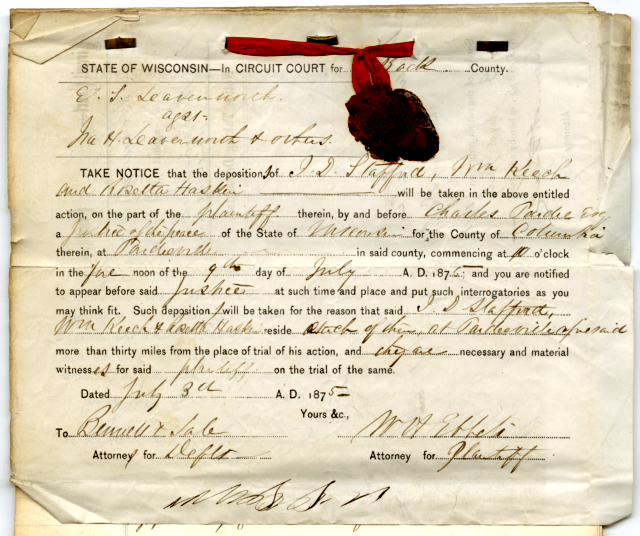
Notice of Deposition for Leavenworth v. Leavenworth, Lavinia’s big divorce case
For most of her legal career, Lavinia was a sole practitioner. She drafted deeds and wills, filed collection actions, and litigated contract, divorce and criminal cases. In November 1877, she wrote about her practice in “A Day in the Life of a Woman Lawyer,” a description that may sound comically familiar to lawyers today. For example, she began her illustrative workday short on sleep due to tossing and turning over a case that she expected to lose because her opposing counsel was the judge’s friend and valuable political ally.
Rhoda Lavinia Goodell was born on May 2, 1839. In celebration of her birthday, we are highlighting some family lore about her personality and escapades as a baby and young child. If hindsight is 20-20, then it was clear early on that Vinnie (as her family and close friends called her) would grow into a trailblazer for women’s rights and other social reforms.
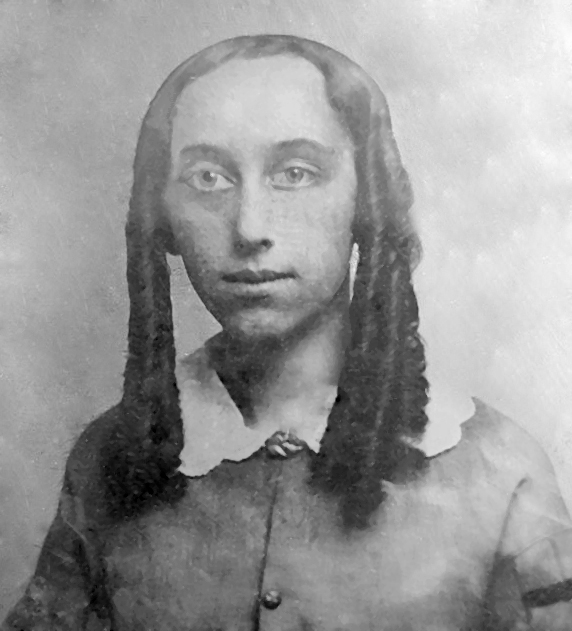
We have no baby photos, but here is Vinnie as a girl.
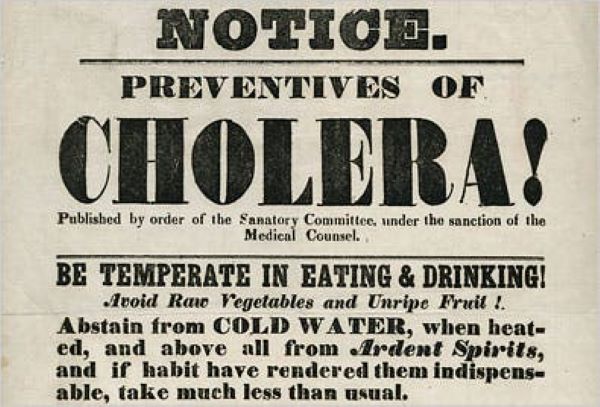
As the United States struggles to deal with COVID-19, it may be useful to remember that pandemics are nothing new, nor is the way local governments deal with them. In 1866, while Lavinia Goodell was living in Brooklyn, teaching at a wealthy merchant’s home – (Learn more about her teaching experiences here and here) – cholera claimed the lives of 1137 people in New York City.
Cholera is caused by bacteria that produces severe diarrhea which can lead to dehydration. As New York’s population grew, sites around the city were littered with cesspools, rotting food and dead carcasses from butcheries. The Board of Health issued orders to clean up sites and urged citizens to engage in better sanitary practices.
“The one element lacking in our government is women.”
–Lavinia Goodell, October 1878
Lavinia Goodell was a lifelong proponent of women’s suffrage. She said she could not remember a time when she did not believe women should have the right to vote.
Lavinia frequently wrote and spoke on the suffrage question. Some of her writings may be found here. In October of 1878, she gave a one hour speech at a gathering of the Rhode Island Woman Suffrage Association in Providence, Rhode Island. Although we have not found a manuscript of Lavinia’s full remarks, the Providence Journal ran a lengthy article praising the speech:
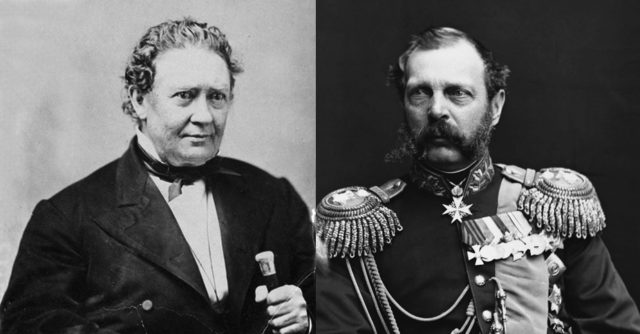
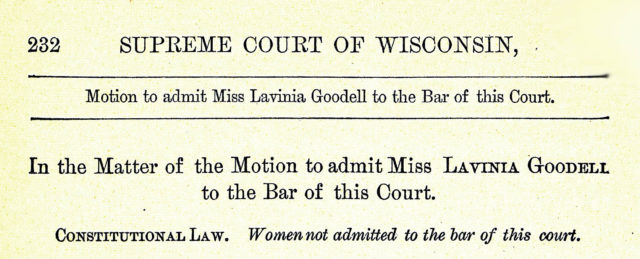
In February 1875, Chief Justice Edward Ryan ruled that Lavinia Goodell could not argue cases to the Wisconsin Supreme Court. The legal profession was no place for pure and delicate women, he reasoned. Lavinia wrote a lengthy rebuttal, which was published around the country. Ryan’s decision was so sexist that even 145 years ago, the press poked fun at him. One commentator called him more tyrannical than Russia’s Czar!
In the early morning hours of March 31, 1880, Lavinia Goodell died in Milwaukee. She was just a month shy of her 41st birthday. Lavinia had left Janesville in November of 1879 and moved to Madison, setting up her law practice there. She went to Milwaukee in January 1880 to seek treatment for her rapidly declining health at a Turkish bath establishment. When that treatment failed, she was taken to a private residence where she spent her final days. Her cousin Sarah Thomas was with her when she died of ovarian cancer. Her attending physician, Dr. Eugene F. Storke, listed the cause of death as “cystilies from paralysis of detrusor muscle.” (To see the death certificate, click here.) The Janesville Gazette wrote: