“If I have any model in fiction, it is Mrs. Stowe.”
Lavinia Goodell, April 21, 1860
Lavinia Goodell’s acquaintance with Congregationalist preacher Henry Ward Beecher has already been chronicled, but she was also an avid reader of the prose produced by two of Henry’s sisters, Harriet Beecher Stowe, and Catharine Beecher.
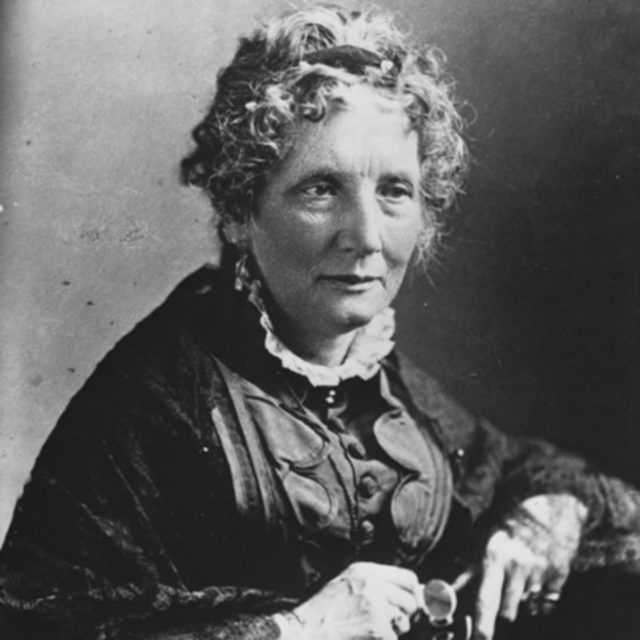
Harriet Beecher Stowe
Harriet Beecher was born in 1811. After teaching for several years, in 1832 she accompanied her father, Congregational minister Lyman Beecher, to Cincinnati, Ohio when he became the president of Lane Seminary. In Cincinnati, Harriet met reformers and abolitionists and in 1833 published her first book, Primary Geography. In 1836 she married Calvin Stowe, a professor at Lane Seminary. Calvin encouraged Harriet’s writing. Harriet wrote many articles and thirty books.
It’s Women’s History month, so we decided to put together Lavinia Goodell’s resume and ask a few employers if they would hire someone like her. They all found her credentials impressive. One said she would definitely hire Lavinia as a lawyer, but her resume does not convey “team player.” Others wondered whether silk stocking law firms would be afraid to hire her. She could repel clients who don’t share her values. She might be better off as a sole practitioner tackling social justice issues.
“We would have every path laid open to woman as freely as to man.”
Margaret Fuller, 1845
Although Margaret Fuller may not widely known today, in the mid-nineteenth century she was a well known teacher, editor, and essayist whose best known book, Woman in the Nineteenth Century, published in 1845, examined the place of women within society. Lavinia Goodell admired Margaret Fuller’s works and spent countless hours reading them in order to prepare a paper that she delivered at a December 1877 meeting of Janesville, Wisconsin’s literary society, the Mutual Improvement Club.
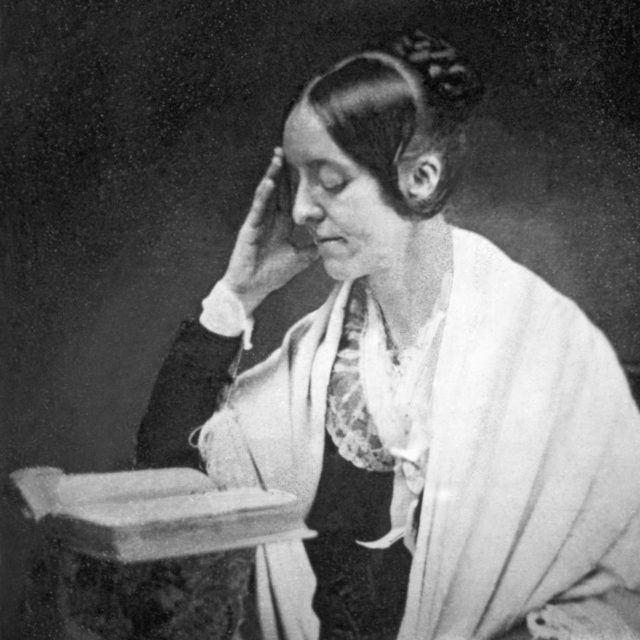
Margaret Fuller
Margaret Fuller was born in Massachusetts in 1810. A precocious child, her father, a lawyer, oversaw her education, providing his daughter with tutors in Latin, philosophy, history, science, literature, and German. After her father’s death in 1835, the family found itself quite poor, and Margaret went to Boston as a teacher. She taught in Bronson Alcott’s school and offered classes for young ladies. She became a friend of Ralph Waldo Emerson and other Transcendentalists. Few would accuse her of being overly modest. It was while dining at Emerson’s home that Margaret uttered what is probably her best remembered remark: “I now know all the people worth knowing in America, and I find no intellect comparable with my own.”
“I have been deeply interested in Dr. Zak’s book.”
Lavinia Goodell, February 25, 1861
Lavinia Goodell was a voracious reader and had eclectic tastes. In addition to reading the popular fiction of the day, she was also very interested in medical and scientific topics. For a time she had a roommate, Nancie Monelle, who was studying medicine, and her lifelong friend Mary Ann Wattles was also a physician.
One of the pioneering woman physicians in the United States was Marie E. Zakrewska. Not only did Lavinia eagerly read the doctor’s autobiography, she and Zakrewska shared a close mutual friend, and there is certainly a possibility that Lavinia met Zakrewska.
When Lavinia Goodell went to work for the newly minted Harper’s Bazar magazine in 1867 (read about her experiences here and here), she worked with and shared an office with Bazar’s editor, Mary Louise Booth, one of the best known and best paid women in publishing.
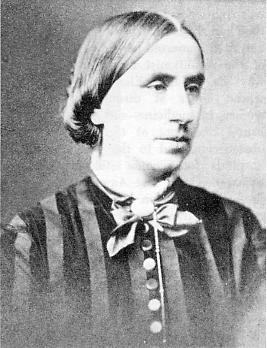
Mary Louise Booth
Mary Booth was born on Long Island in 1831. She displayed great literary tendencies at an early age and was naturally inclined toward the study of languages. By the time she was 20, she had begun translating foreign literary works into English. In 1859 she published A Complete History of the City of New York, which received rave reviews, and later published two revised editions. During the Civil War, Mary Booth translated Gasparin’s The Uprising of a Great People in the course of a week during which she worked round the clock. President Lincoln wrote her a letter of thanks for her help in strengthening the spirit of the American people.
“The part assigned to women by nature is inconsistent with the practice of law.”
In re Dorsett, Minnesota Court of Common Pleas, October 1876
Martha Angle Dorsett was the first woman admitted to practice law in Minnesota. Ms. Dorsett was born in New York in 1851. After earning a bachelor of philosophy degree from the University of Michigan, she enrolled in the Iowa College of law. She graduated there in 1876 and married her classmate, Charles Dorsett, the same year.
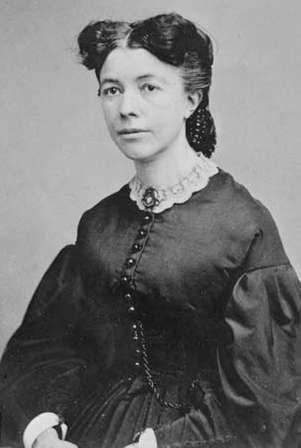
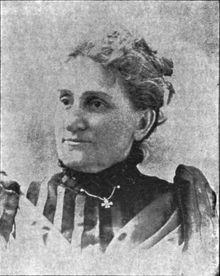
Martha Angle Dorsett
Dorsett and her husband were admitted to the Iowa bar. They then relocated to Minneapolis, Minnesota, where they applied for admission to practice in Minnesota’s courts. Charles Dorsett’s application was granted. Martha Dorsett’s was not.
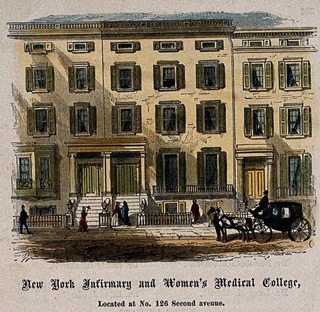
In 1869, in an effort to improve her German language skills, Lavinia Goodell moved from her aunt and uncle’s home in Brooklyn into an upper room of a home on East 23rd Street in Manhattan owned by a German doctor. For a time she had a roommate who was a medical student at the Woman’s Medical College and Infirmary, an institution recently opened by sisters Elizabeth and Emily Blackwell. Lavinia found Nancie Monelle very companionable, although they had divergent interests.
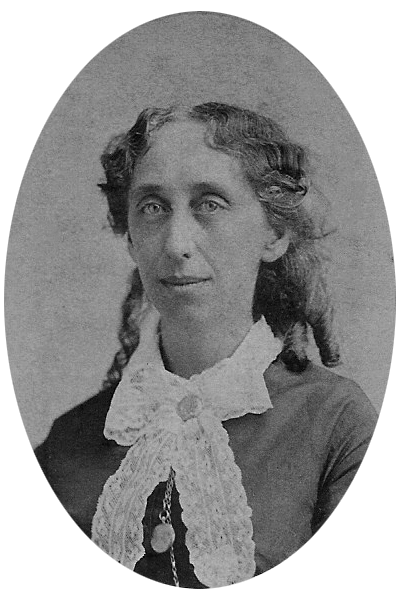
Nancie Monelle
Lavinia wrote to her sister:
My new chum is quite a character. She is short, plump, black eyed, rosy, jolly and good-natured. Supports herself and studies medicine. She is very gay, too, and quite a flirt, and fond of the gentlemen. We get along admirably, because I don’t care a fig for them & am quite willing she should have them all to herself…. Miss Monelle has already laid up money enough to take her thro’ the medical college. She has been a teacher several years.
Nancie Monelle was born in New York in 1841. Her ancestors were French. Her great grandfather had come to America with the young Marquis de Lafayette and liked the country so much that he never went home again. Nancie graduated from a college in Poughkeepsie, New York in 1861 and taught at various schools and colleges, including Vassar. While at Vassar she decided to study medicine. Mary Ann Wattles, a fellow student at the Woman’s Medical College and a longtime friend of Lavinia, recommended that the two women room together.
Lavinia enjoyed Nancie’s high spirits. She reported to her parents that they “have lots of fun laughing over the eccentricities of our German friends.” But at Christmas 1869, when the Germans stealthily tried to get the women drunk, teetotaling Lavinia was disappointed in Nancie, telling her sister:
My roommate had no conscience about the matter, but drank glass after glass till she dared not drink any longer & then pretended to & threw the wine away furtively, when they were not looking, all to be “social.” I was indignant at her, for she knows better.
By the spring of 1870, Nancie Monelle had taken a room at the medical college.
Although Lavinia did not mention her again, Nancie Monelle went on to have a distinguished career. She graduated from medical school in 1872 after writing her thesis on cholera and earning highest honors in surgery. In 1873, she became a physician missionary in India for the Woman’s Foreign Missionary Society of the Methodist Episcopal Church. She was the first woman physician to go alone into a native Indian state. According to the Missionary Society’s 1896 report, “The ruler of the province furnished elephants, a regiment of sepoys and a band of music to escort her to the palaces of the various noblemen.” After three years in India, after establishing a dispensary and hospital and treating 40,000 patients, she married Rev. Henry Mansell, a Methodist minister. The couple remained in India. In the 1880s, during a cholera epidemic, Dr. Mansell took charge of the dispensary with native assistants and was so successful that the Indian municipality sent her a handsome sum for the purchase of medicine.
In the 1890s, Dr. Mansell became appalled at the Indian custom of marriages being arranged for very young children, which sometimes resulted in grievous injuries, and even death, to the young girls. Dr. Mansell drew up a petition, signed by 55 other women physicians, raising the marriageable age for girls to fourteen. The government raised the marriageable age to twelve, which was seen as an important step in the domestic and social life of the Indian people.
Dr. Mansell died in India in 1903 and was buried there. Her husband died in 1911 and is buried in Poughkeepsie.
Sources consulted: Lavinia Goodell’s letters to Maria Frost (November 21, 1869 December 30, 1869;) Lavinia Goodell’s letters to William and Clarissa Goodell (November 28, 1869; March 21, 1870; April 17, 1870); Frances J. Baker, The Story of the Woman’s Foreign Missionary Society, Hunt & Eaton, New York (1896); Mary Sparkes Wheeler, First Decade of the Woman’s Foreign Missionary Society of the Methodist Episcopal Church, Phillips & Hunt, New York (1893); Janice P. Nimura, The Doctors Blackwell, W. W. Norton & Co. (2021).
History is a story with many voices that we tell together.
Lavinia Goodell
The Wisconsin Historical Society was founded in 1846, two years before Wisconsin became a state. Lavinia Goodell, who in 1874 would go on to become Wisconsin’s first woman lawyer, was then a seven year old girl living in New York state.
In 2021, the Wisconsin Historical Society is celebrating its 175th anniversary of collecting, preserving, and sharing the state’s rich history. The Society is recognizing Wisconsin visionaries, changemakers, and storytellers. We are deeply honored that Lavinia Goodell is among the outstanding Wisconsinites singled out for recognition. https://www.wisconsinhistory.org/175.
In the words of the Wisconsin Historical Society, we look to the past to inspire the future, and we study the stories of those who came before us to define who we are today. Congratulations to the WHS on its 175th anniversary. Long may it continue to share stories of our state’s past and inspire new generations to build a better tomorrow.