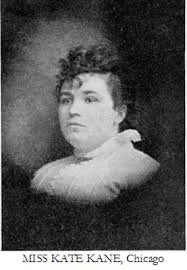
“At the time of her death, Miss Goodell was in debt to me in the sum of $50.”
Kate Kane, January 1881
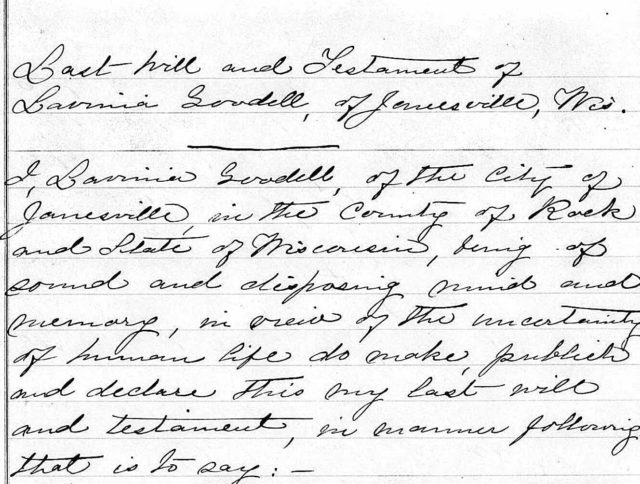
When Lavinia Goodell drafted her will in July of 1879, she no doubt believed that her estate would be divided exactly as she specified, and she probably did not expect anyone to file spurious claims. Unfortunately, her will was challenged and her friend and fellow Janesville attorney, Kate Kane, filed a claim against the estate.
In 1879, approximately nine months before she died, Lavinia Goodell spent part of the July 4th holiday drafting her will.
There is no indication that she had previous wills. Both of Lavinia’s parents had died in 1878. She had drafted their wills. Upon their deaths, Lavinia inherited a goodly sum of money and, being a meticulous planner, she no doubt wanted to make sure that when she died, her estate would be distributed precisely the way she wanted. (Read the entire will here.)
In addition to her good friend Mrs. Beale, Lavinia Goodell counted on Mrs. Orrin Guernsey to advance the cause of temperance and, to a lesser extent, women’s rights.
(Stock photo. Does not depict the members of Janesville’s LTU)
Sarah Cooley Guernsey was born in New Hampshire in 1821. At age seventeen she married Orrin Guernsey and in 1843 the couple and their children moved to Janesville. The Guernseys featured prominently in Janesville society. Mr. Guernsey was twice elected to the Wisconsin legislature. In the 1860s, President Johnson appointed him a member of a commission that concluded treaties with the Sioux Indians. He served on the Janesville city council; was a member of the board of the directors for the institution for the blind; served on the board of the Madison Mutual Insurance Company; and was a founder of the Rock County Agricultural Society.
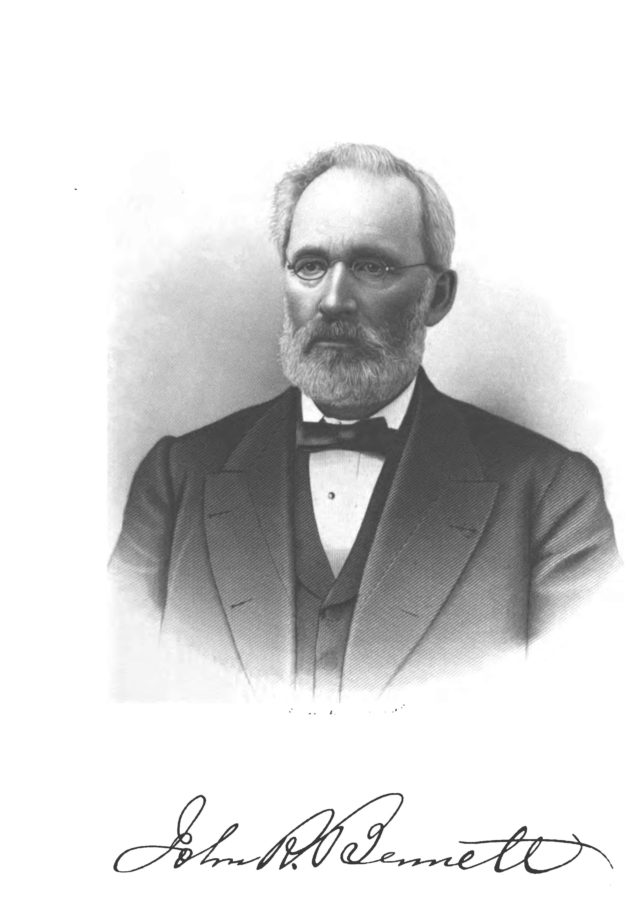
The case that spawned Lavinia Goodell’s epic battle for admission to the Wisconsin Supreme Court was Tyler v. Burrington. In November of 1874, Lavinia was retained by Lydia Burrington, a doctor’s widow who had been sued by a young woman whom the Burringtons had taken in ten years earlier and treated as a family member. The young woman claimed she had been treated as a servant and that Dr. Burrington had told her he intended to pay her for her work. Lavinia could tell that the case was likely to be a tough one, and she had only been practicing law for five months, so she looked for someone who would assist her. After Pliny Norcross turned her down, she turned to John R. Bennett.
Bennett initially said he could not help Lavinia either, but by January 1875, to Lavinia’s relief, he changed his mind.
“Mr. Sloan read my argument. Judge Ryan mad as a bull.”
Lavinia Goodell, December 14, 1875
When Lavinia Goodell applied for admission to the Wisconsin Supreme Court bar in 1875, she was not allowed to present the motion to the court herself. Instead, her argument was read by Assistant Attorney General I.C. Sloan. Along with J.B. Cassoday, Sloan, a former Janesville attorney, was one of the people who made Lavinia’s admission to the Supreme Court bar possible.
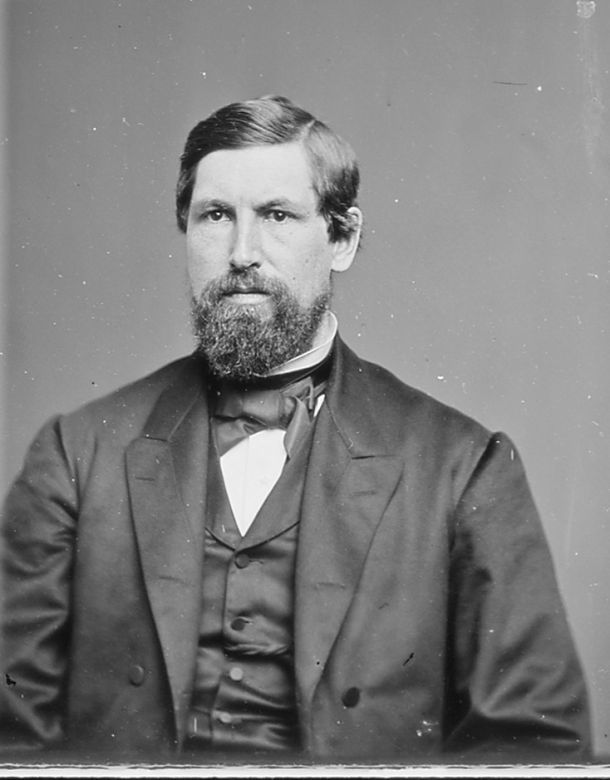
One of Lavinia Goodell’s staunchest allies during her legal career was John Bolivar Cassoday. He offered her advice on cases, allowed her to use his extensive law library, and as a member of the Wisconsin legislature, introduced the bill that decreed that no person could be denied a license to practice law on account of sex, thus allowing Lavinia to be admitted to practice before the Wisconsin Supreme Court
“I have a tremendous large school. 92 names on my day school list.”
Sarah Thomas to Lavinia Goodell, January 22, 1871
Lavinia Goodell had lifelong friendships with many people who were active in the abolitionist movement prior to the Civil War. Once the war ended, many continued to work to gain equal opportunities for Blacks. One of those people, Sallie Holley, came to play an important part in the life of Lavinia’s cousin and close confidante, Sarah Thomas.
Sallie Holley was born in New York State in 1818. Her father, Myron, was an abolitionist and an associate of Lavinia Goodell’s father. Holley attended Oberlin College in Ohio, the first predominantly white college to admit Black male students (in 1835) and two years later the first college in the country to admit women. At Oberlin, Holley met Caroline Putnam. In later years Putnam described them as “the only two ultra radicals there.”
“Got a telegram from Lucy Stone that her suffrage convention was to be here”
Lavinia exchanged dozens of letters with Lucy Stone, a pioneer for women’s rights and one of the most famous women in mid-19th century America. In 1870, Lucy and her husband launched the Woman’s Journal, which was hailed as a “history-maker and history recorder for the suffrage cause” by Carrie Chapman Catt, who played a leading role in the passage of the 19th Amendment. Catt said “the suffrage success of today is not conceivable without the Woman’s Journal‘s part in it.” Lavinia not only wrote for the Woman’s Journal, in December 1879 she was formally listed on its masthead as a contributor.